
Attending the divine daily ceremonies at the ancient shrine of Maa Ashapura in Kutch is one of the most spiritually powerful experiences for any devotee. The sacred Ashapura Mataji Matanomadh Aarti timings are strictly observed throughout the year, marking distinct spiritual transitions from dawn to dusk. Every day, thousands of pilgrims assemble in the central Sabhamandap to witness the traditional lamp-lighting rituals, accompanied by the deep reverberation of temple drums (Nagadas), copper cymbals, and Vedic chants.
Whether you are traveling to Kutch for the first time or returning for your annual pilgrimage, knowing the exact hours for Mangla Aarti, mid-day Dhoop Aarti, and evening Sandhya Aarti will help you structure your visit seamlessly. As the primary informational portal for matanomadh (mata na madh), matanomadh.in presents this definitive 2026 master post outlining the ritual mechanics, priest traditions, seating guidelines, and seasonal timetable variations for Maa Ashapura’s daily Aarti ceremonies.
Table of Contents
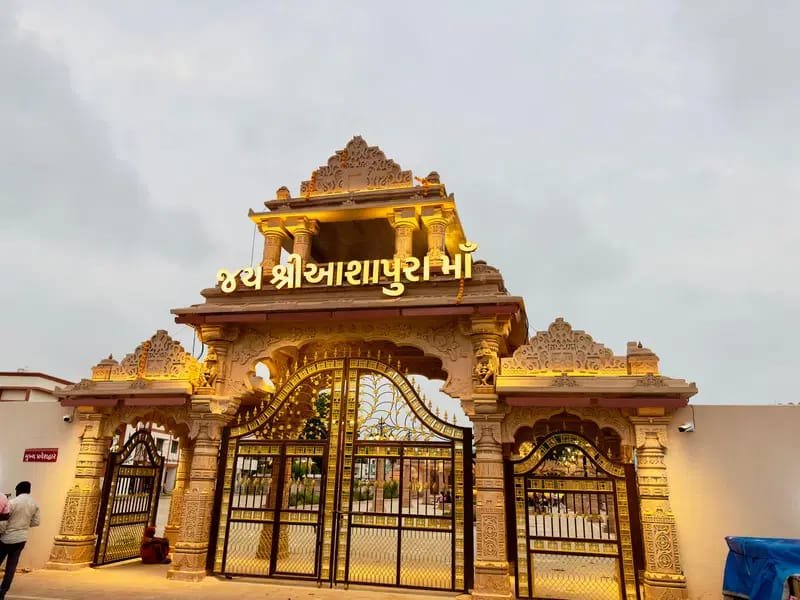
Section 1: Spiritual Foundation of Aarti at Mata No Madh
In the Shakta tradition of Kutch, the daily Aarti at matanamadh is not merely a symbolic visual worship; it is considered an invocation of the living cosmic energy (Shakti) residing within the ancient swayambhu (self-manifested) idol of Goddess Ashapura. The hereditary priests, known as Kapadis and Bhuvas, follow traditional rituals that have remained unchanged for centuries.
The three primary daily Aarti sessions represent three distinct states of divine communion:
- Mangla Aarti: Awaking the deity at dawn, symbolizing the dissipation of spiritual ignorance and the awakening of inner light.
- Dhoop Aarti: Offering incense, natural herbs, and purificatory aromatic smoke during mid-day to cleanse the inner sanctum and surrounding atmosphere.
- Sandhya Aarti: The grand twilight adoration, celebrating the protective, nurturing energy of the divine Mother before nightfall.
For pilgrims arriving via road routes or state transport options like the GSRTC Official Bus Service, aligning arrival times with these sacred windows guarantees an enriching spiritual experience.
Section 2: Complete Daily Aarti Schedule (Regular Days)
The temple administration maintains a punctual schedule on regular days (non-festival periods). The inner sanctum curtains are drawn briefly during specific ritual preparations before each Aarti begins.
| Aarti Name | Ritual Purpose | Sanctum Curtain Time | Exact Aarti Duration | General Assembly Time |
| Mangla Aarti | Morning awakening & light offering | 05:15 AM – 05:30 AM | 05:30 AM – 06:00 AM | Reach queue by 04:45 AM |
| Dhoop Aarti / Bhog | Mid-day incense & royal food offering | 12:45 PM – 01:00 PM | 01:00 PM – 01:30 PM | Reach hall by 12:15 PM |
| Sandhya Aarti | Sunset adoration & grand evening worship | 07:15 PM – 07:30 PM | 07:30 PM – 08:00 PM | Reach queue by 06:30 PM |
Note: All Ashapura Mataji Matanomadh Aarti timings are synchronized with local sunset and sunrise variations in Western Kutch, shifting by approximately 10–15 minutes between summer and winter seasons.
Section 3: Mangla Aarti (Dawn Ritual) & Sabhamandap Entry Rules
The Mangla Aarti at mata no madh is considered exceptionally peaceful and spiritually potent. As the morning air in Kutch is quiet, the rhythmic echo of temple bells creates an atmosphere of deep reverence.
Ritual Procedure & Sequence
- Panchamrut Abhishekam (Private): Prior to public entry, priests perform the sacred bath and adornment (Shringar) of the idol behind closed curtains.
- Curtain Opening: At exactly 05:30 AM, the central sanctum curtains are pulled back, revealing Maa Ashapura fully decorated in fresh silk sarees, floral garlands, and gold ornaments.
- Five-Tiered Lamp Offering: The head priest holds the five-tiered camphor lamp (Panch-Aarti), circulating it before the deity while sacred verses are chanted.
Pilgrim Assembly & Entry Guidelines
- Queue Strategy: The outer temple gates open at 04:30 AM. To secure a spot inside the primary Sabhamandap hall, pilgrims should join the entry line by 04:45 AM.
- Seating Division: The central hall features separated standing areas for male and female devotees to prevent congestion.
- Movement Restriction: Once the Mangla Aarti begins at 05:30 AM, the moving queue pauses, allowing all devotees present in the hall to watch the full 30-minute ceremony without interruption.
Section 4: Dhoop Aarti & Mid-Day Bhog Protocols
The mid-day ritual at matano madh centers on the offering of aromatic resin (Guggul), camphor, and fresh incense during the Rajbhog ceremony.
Sequence of Mid-Day Ceremonies
- 12:45 PM – 01:00 PM: The inner sanctum doors are temporarily closed as priests prepare the traditional royal food offering (Rajbhog), which includes sweet preparations, rice, ghee, and traditional Kutchi delicacies.
- 01:00 PM: The Dhoop Aarti commences. Thick, fragrant smoke from natural herbs and pure incense is swirled throughout the inner sanctum and outer hall to purify the atmosphere.
- 01:30 PM: Following the completion of Dhoop Aarti, the main sanctum enters its mid-day closure period (01:00 PM to 03:00 PM), during which general Darshan is paused for the deity’s rest.
| Time | Stage / Activity | Details & Instructions |
| 12:15 PM | Recommended Arrival | Arrive early to secure a position in the hall before the mid-day rituals begin |
| 12:45 PM | Sanctum Preparation | Sanctum curtains close for Rajbhog preparation |
| 01:00 PM | Dhoop Aarti | Incense and Bhog ritual commences |
| 01:30 PM | Afternoon Rest | Aarti concludes; sanctum enters the afternoon rest period |
| 03:00 PM | Sanctum Reopens | Temple curtains open for afternoon darshan |
Section 5: Sandhya Aarti (Sunset Ritual) & Evening Queue Management
The Sandhya Aarti is the largest daily gathering at mata na madh, drawing thousands of local pilgrims and long-distance travelers. As twilight sets over Kutch, the entire temple complex is illuminated with grand decorative lighting.
Unique Highlights of Sandhya Aarti
- Live Musical Accompaniment: Unlike morning rituals, the evening Aarti features full traditional brass percussion, large temple drums (Nagadas), and gong ringing performed by traditional musicians.
- Illumination Ceremony: As the first lamp is lit at 07:30 PM, the exterior stone architecture and inner gold embellishments reflect brilliant light across the temple courtyard.
- Queue Management During Sunset: Because crowd density peaks during evening hours, the temple administration initiates a twin-line management system:
- Standing Sabhamandap Queue: For pilgrims who arrive early (by 06:30 PM) to sit or stand in the main hall throughout the entire Aarti.
- Continuous Moving Queue: For pilgrims arriving right at Aarti time, allowing them to view the glowing deity while moving continuously through the outer corridor.
Section 6: Ashwin & Chaitra Navratri Aarti Schedule Shifts
During the nine nights of Navratri, the Shree Ashapura Mataji Jagir Trust extends temple access. To accommodate continuous streams of devotees, the regular afternoon sanctum closure is minimized, and the evening Aarti schedule is adjusted to align with festival Garba and royal Darshan timings.
| Festival Event / Day | Festival Aarti Name | Adjusted Sanctum Timing | Operational Notes for Pilgrims |
| Navratri Day 1 (Ghatasthapana) | Sthapana Aarti | 08:00 AM – 09:30 AM | Special morning lighting following the ceremonial jar installation (Ghatasthapana). |
| Navratri Days 1 to 6 | Extended Mangla Aarti | 04:30 AM – 05:30 AM | Shifted 30 minutes earlier to clear early morning foot-pilgrim lines. |
| Navratri Days 1 to 6 | Festival Sandhya Aarti | 07:00 PM – 07:45 PM | Followed immediately by traditional Kutchi Garba in the outer courtyard. |
| Navratri Day 7 (Saptami) | Night Mahagauri Aarti | 11:30 PM – 12:00 AM | Midnight Aarti performed as part of overnight Darshan openings. |
| Navratri Day 8 (Maha Ashtami) | Sacred Hawan Aarti | 07:00 PM – 08:30 PM | Performed upon completion of the royal Yajna ceremony (Hawan). |
| Navratri Day 9 (Maha Navami) | Patri Boli Aarti | 05:00 AM – 06:30 AM | Culmination ritual featuring sacred leaf/flower blessings (Patri). |
| Operating Period | Morning / Afternoon Window | Evening / Night Window | Total Uninterrupted Access | Special Operational Details |
| Regular Days | 05:00 AM – 01:00 PM | 03:00 PM – 09:00 PM | ~14 Hours (with mid-day rest) | Standard daily darshan schedule |
| Navratri Days | 05:00 AM – 01:00 AM | (Continuous) | 20 Hours | Extended non-stop access for festival pilgrims |
| Peak Days (7th & 8th) | Overnight | Overnight | Continuous 24/7 Streams | Overnight queue streams actively managed to handle peak rush |
Section 7: Patri Boli, Hawan & Royal Family Ceremonial Aarti
One of the most unique aspects of the Aarti tradition at mata no madh (matano madh) is the preservation of royal customs established by the Jadeja dynasty of Kutch. These ceremonies blend Vedic rituals with centuries-old regional heritage.
1. Maha Ashtami Hawan & Yajna Ceremonies
- Date & Time: Held on Aso Sud Ashtami (8th day of Ashwin Navratri). The sacred fire (Yajna) is ignited around 11:00 AM at the Hawan Shala within the temple complex.
- Ahuti & Purnaahuti: The final offering (Purnaahuti) is performed in the late afternoon (typically between 04:00 PM and 05:30 PM) by the head priest alongside members of the royal family.
- Hawan Aarti: Immediately following Purnaahuti, a grand Aarti is offered to the Yajna Kund, accompanied by Vedic chantings. Public access to the inner courtyard is regulated during these hours for safety reasons.
2. The Sacred Patri Boli Ceremony
- Significance: Patri Boli refers to the traditional drop of sacred leaves/flowers (Patri) placed on the shoulder of Goddess Ashapura’s idol. The falling of the Patri during prayer is revered as a direct divine blessing for prosperity across Kutch.
- Execution Time: This ritual takes place in the early morning hours of Maha Navami (between 04:30 AM and 06:00 AM).
- Public Viewing: During the execution of Patri Boli, inner sanctum access is restricted exclusively to hereditary Kapadi priests and royal representatives. General public lines resume immediately after the subsequent Navami Mangla Aarti at 06:30 AM.
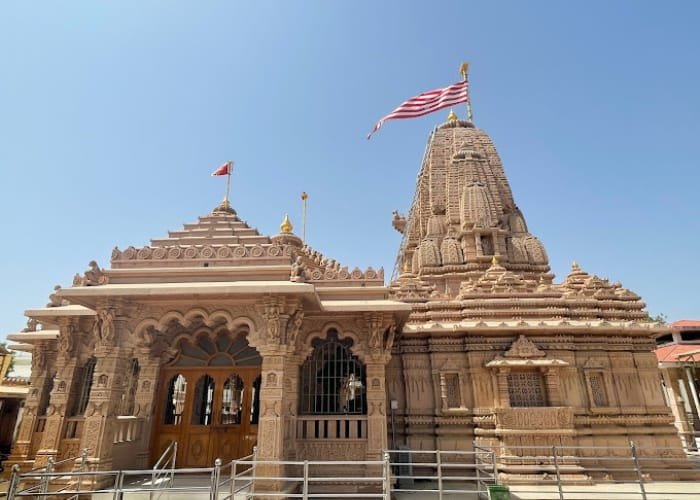
Section 8: Special Offerings & Aarti Plate Protocols
Many pilgrims traveling to matanamadh wish to present personal worship plates (Aarti Thali) or offer lamps to Maa Ashapura during the daily ceremonies. To maintain safety and prevent crowd congestion, the temple administration enforces strict protocols regarding personal offerings.
| Decision / Item | Permitted Status | Rules & Protocols |
| Personal Aarti Thali / Private Lit Lamps | ❌ PROHIBITED | Private lit lamps are strictly forbidden inside the Sabhamandap for safety and protocol reasons |
| Dry Offerings (Sukhdi, Peda, Coconut) | ✅ ALLOWED | Must be sealed and handed over at designated offering points |
| Standard Trust Aarti | Official Protocol | Performed exclusively by the designated Kapadi Priests |
| Special Puja Registration | Official Protocol | Must be arranged and handled directly through the Admin Desk |
Official Guidelines for Personal Offerings
- Prohibition of Lit Lamps: Pilgrims are not allowed to bring lit oil or camphor lamps (Aarti Thali) into the queue or inner Sabhamandap due to strict fire safety regulations.
- Standard Token Plates: If you wish to sponsor an official Aarti, you must register at the Trust Administrative Office near the main gate. The trust provides standardized, pre-approved brass plates managed directly by temple priests.
- Flower & Fabric Offerings: Red silk scarves (Chunari), coconut, and fresh flower garlands may be handed to temple attendants at the sanctum railing. The items are briefly touched to the feet of Maa Ashapura before being returned to the devotee as Prasad.
- Monetary Donations: Cash offerings should be deposited directly into official sealed donation boxes (Gollak) or handed to the official donation counter for a stamped receipt—never thrown onto the Aarti platform.
Section 9: Inner Hall Seating Capacity & Priority Enclosures
The central prayer hall (Sabhamandap) directly facing the Garbhagriha is built to accommodate approximately 1,200 to 1,500 standing devotees during peak ritual hours.
| Hall Section / Zone | Target Capacity | Designated Allocation | Viewing Angle & Quality |
| Front Central Enclosure | ~300 Standing | Female Devotees & Young Children | Direct frontal view of Maa Ashapura sanctum. |
| Right Wing Enclosure | ~400 Standing | Male Devotees | Clear diagonal view of the deity and head priest. |
| Left Wing Enclosure | ~150 Seated / Wheelchair | Senior Citizens (60+) & Divyang | Elevated viewing platform with ramp access. |
| Outer Corridor / Porch | ~500 Standing | General Moving Line | Overhead LED screen viewing during Aarti freeze. |
Sabhamandap Rules During Aarti
- Queue Freeze Period: Exactly 5 minutes before the Aarti begins (05:25 AM for Mangla and 07:25 PM for Sandhya), the general entry line is halted. Pilgrims standing inside the hall must remain in place until the 30-minute ceremony concludes.
- Priority Accessibility: Senior citizens and differently-abled devotees should enter through the designated North Rampway 30 minutes before Aarti time to secure seated spots in the Left Wing Enclosure.
- Child Safety: Parents with young children are advised to position themselves near the outer edge of the Front Enclosure for easy exit in case of heavy crowd pressure.
Section 10: Digital Token System & Live Broadcast Guidelines
For pilgrims who cannot attend the physical ceremonies at matanamadh, the temple administration and digital web portals offer virtual access options.
| Access Channel | Platform / Medium | Timing & Coverage Details | Key Features |
| Official Live Webcam Feed | Web Streaming (matanamadh.org) | • Active during Mangla Aarti (05:00 AM) • Active during Sandhya Aarti (Sunset) | Official direct web stream for online devotees |
| Local Kutch Cable Broadcast | Regional Cable TV | Continuous coverage on Kutchi regional spiritual channels | Features real-time audio feed and live temple visual coverage |
Official Live Streaming Details
- Daily Live Stream Hours: Morning Mangla Aarti (05:30 AM to 06:00 AM) and Evening Sandhya Aarti (07:30 PM to 08:00 PM).
- Web Portal Access: Live digital streaming links are updated daily on Mata No Madh Official Web Portal for international and out-of-state devotees.
- Virtual Puja Tokens: Devotees can request online token receipts for special festival name-sponsorships (Sankalp Puja) directly at the trust administrative desk or through authorized online portals.
Section 11: Pilgrim Logistics, Accommodations & Transport Links
Planning your arrival around the Ashapura Mataji Matanomadh Aarti timings ensures you do not miss the sacred prayer hours due to travel delays.
Yatri Niwas & Dharamshala Lodging
The Shree Ashapura Mataji Jagir Trust manages clean lodging blocks within 100 to 200 meters of the main entrance gate.
- Main Yatri Niwas: Offers AC and Non-AC double rooms ranging from ₹300 to ₹1,200 per night.
- Community Bhavans: Facilities such as Patidar Bhavan provide family-style rooms near the main bus stop.
- Booking Policy: Rooms operate primarily on a walk-in basis with a 24-hour checkout rule. During Ashwin Navratri, lodging is allocated strictly on a first-come, first-served basis.
Transport Schedules (GSRTC Bus Connectivity)
Reaching mata no madh (matano madh) from Bhuj is straightforward via regular state highway buses operated by the GSRTC Official Bus Portal.
| Departure City | Distance to Shrine | Bus Frequency | First Available Bus | Estimated Travel Time |
| Bhuj Central Bus Depot | ~95 km | Every 15 to 30 Minutes | 01:15 AM (Night Express) | 2 to 2.5 Hours |
| Gandhidham ST Stand | ~150 km | 6 Direct Daily Expresses | 05:30 AM | 3.5 Hours |
| Nakhatrana Transit Point | ~45 km | Continuous Shared Taxis / Buses | 05:00 AM | 1 Hour |
Section 12: Surrounding Shrine Aarti Timings (Chachra Kund & Hinglaj Mata)
Visiting the adjacent sub-shrines before or immediately after the main Ashapura Aarti is a traditional custom among devotees.
| Sub-Shrine / Water Body | Location relative to Main Shrine | Key Daily Ritual | Ritual / Aarti Timing |
| Chachra Kund | ~300 meters North | Sacred dip & Mundan (head-shaving) bath | 05:00 AM – 06:30 PM (Dip Hours) |
| Hinglaj Mata Temple | Inside main outer courtyard | Morning & Evening Incense Offering | 06:00 AM & 07:00 PM |
| Chachra Bhavani Cave | Hillside west of Chachra Kund | Traditional lamp lighting (Deep Prajwalan) | 06:30 AM & 06:30 PM |
| Khatla Bhavani Temple | ~1.5 km West (Hilltop) | Morning prayer ritual | 07:00 AM – 11:00 AM |
| Time | Activity / Ritual | Location / Site | Details |
| 04:30 AM | Holy Wash & Preparation | Chachra Kund | Initial ablutions and preparation before morning prayers |
| 05:30 AM | Mangla Aarti | Main Ashapura Mata Temple | Primary morning worship and main sanctum darshan |
| 06:15 AM | Circumambulation & Offerings | Hinglaj Mata Temple | Post-aarti rituals and pradakshina |
| 07:00 AM | Morning Darshan | Chachra Bhavani & Khatla Bhavani Click to open side panel for more information | Secondary shrine visits to conclude the morning circuit |
Section 13: Frequently Asked Questions (FAQs)
Q1: What is the exact time for Mangla Aarti at Mata No Madh?
A: The daily Mangla Aarti begins precisely at 05:30 AM. The outer gates open at 04:30 AM, and pilgrims are advised to take their places in the main Sabhamandap queue by 04:45 AM to secure a clear view of the opening curtains.
Q2: Does the temple charge any fees for attending the Aarti?
A: No. Attending all daily Aarti ceremonies (Mangla, Dhoop, and Sandhya) is completely free of charge. The temple trust does not issue paid VIP passes or charge entry fees for viewing the Aarti.
Q3: Are mobile phones or cameras allowed during the Aarti?
Ans: No. Photography, videography, and mobile phone usage are strictly prohibited inside the main Sabhamandap and inner sanctum during Aarti hours. Electronics must be switched off and deposited at the free locker counters near the entrance gate.
Q4: How do Aarti timings change during Navratri?
A: During Ashwin and Chaitra Navratri, Mangla Aarti is shifted earlier to 04:30 AM, and additional midnight Aarti ceremonies take place on Saptami and Ashtami. The regular 01:00 PM to 03:00 PM mid-day rest period is minimized to accommodate foot pilgrims (Padyatris).
Q5: What is the best way to travel from Bhuj to attend the morning Mangla Aarti?
A: To attend the 05:30 AM Mangla Aarti, pilgrims should take an early overnight or pre-dawn bus via the GSRTC Official Bus Service, or hire a private taxi from Bhuj departure points by 03:00 AM (a 2-hour drive via State Highway 42).
Section 14: Final Summary & Essential Visitor Aarti Checklist
Ensure a respectful and seamless pilgrimage to matano madh (matanamadh) by following this final preparation checklist:
- Timetable Check: Confirm the season-specific Aarti hours (Mangla at 05:30 AM, Dhoop at 01:00 PM, Sandhya at 07:30 PM).
- Early Arrival: Reach the Sabhamandap at least 30 to 45 minutes prior to the Aarti start time for optimal seating or standing placement.
- Attire Compliance: Dress in modest, traditional Indian clothing (Sarees, Salwar Kameez, Kurtas, or Dhotis). Avoid shorts or sleeveless tops.
- Footwear Removal: Store shoes at the free trust counters outside the East or North gates before entering the main courtyard.
- Priority Access: Senior citizens (60+) and differently-abled pilgrims should utilize the North Rampway for priority access to the Left Wing Enclosure.