
Witnessing the sacred dawn ceremony at the ancient shrine of Maa Ashapura in Kutch is a transformative spiritual milestone for every pilgrim. Learning how to attend Live Mangla Aarti at Mata No Madh requires meticulous advance planning, as the morning gates open while the surrounding village of Lakhpat is still asleep. Every morning, hundreds of devout visitors gather inside the illuminated Sabhamandap to witness the unveiling of the deity behind sacred silk curtains, accompanied by the energetic cadence of temple drums (Nagadas), ringing brass bells, and ancient Vedic invocations.
Navigating the early morning entry queues, securing a prime viewing location, and coordinating pre-dawn transit from Bhuj or local Dharamshalas can prove challenging during peak weekends and festival seasons. As the authoritative digital repository for matanomadh (mata na madh), matanomadh.in presents this definitive 2026 step-by-step master guide detailing exact gate unlocking times, hall entry protocols, queue strategies, transit arrangements, and spiritual guidelines for attending the divine Mangla Aarti.
Table of Contents
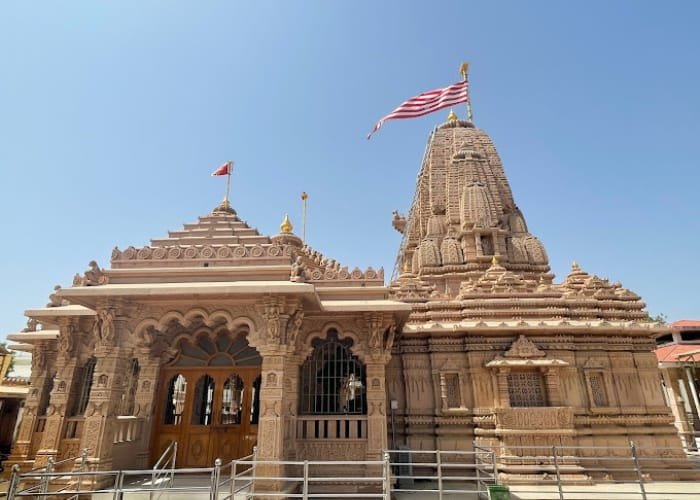
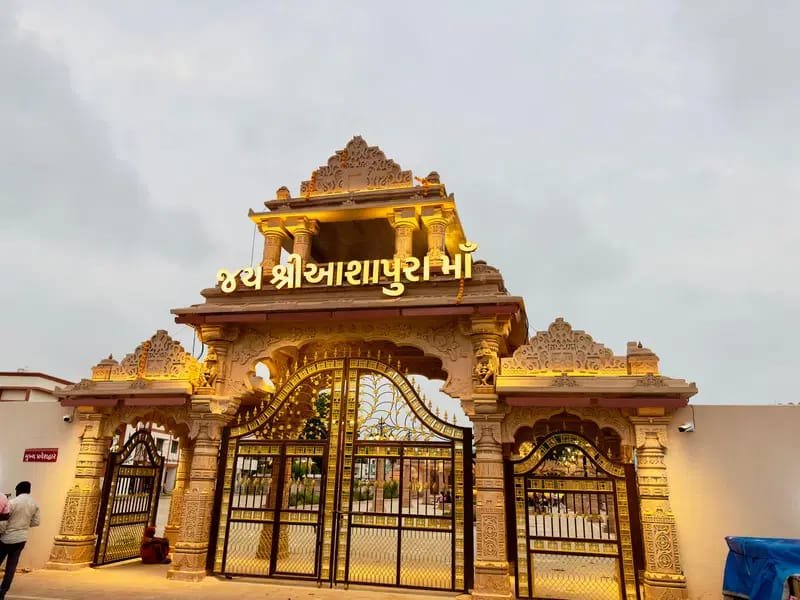
Section 1: Spiritual Significance of Dawn Mangla Aarti
In the Shakta pilgrimage traditions of Western Gujarat, Mangla Aarti represents the first and most spiritually charged worship of the day. The term Mangla translates to “blessed” or “auspicious,” signifying the awakening of the divine energy (Shakti) within the swayambhu (self-manifested) idol of Goddess Ashapura.
| Stage # | Ritual / Event | Timing | Significance & Key Details |
| 1 | Purification & Abhishekam | 04:30 AM – 05:15 AM | Private: Initial cleansing and ceremonial bathing ritual |
| 2 | Curtain Unveiling | 05:30 AM | Symbolizes the Awakening of Divine Shakti |
| 3 | Panch-Aarti Lamp Offering | Post-Unveiling | Ritual lighting with a 5-tiered camphor light circle |
| 4 | General Morning Darshan | Open till 01:00 PM | Uninterrupted public access for all devotees |
Key spiritual elements include:
- Brahma Muhurta Alignment: The rituals begin during the sacred pre-dawn hours (Brahma Muhurta), when spiritual energy and mental stillness are at their peak.
- Adornment & Shringar: Before the sanctum curtains open to the public, hereditary Kapadi priests cleanse the idol and adorn Maa Ashapura with fresh red silk (Chunari), silver ornaments, and fragrant regional flowers.
- Aura of Divine Protection: Attending this first ceremony is traditionally believed to fulfill heart-felt vows (Mannat) and provide divine protection for family members throughout the year.
Section 2: Complete Pre-Dawn & Morning Schedule (2026 Timetable)
Understanding how to attend Live Mangla Aarti at Mata No Madh starts with memorizing the exact operational timeline enforced by the temple trust. The schedule remains strictly punctual throughout the year, adjusting by only a few minutes during seasonal solstice changes.
| Operational Milestone | Exact Time Slot | Activity / Facility Status | Action Required for Devotees |
| Outer Campus Unlocking | 04:30 AM | Outer ring gates and courtyard unlock | Arrive at campus outer perimeter |
| Locker & Shoe Counter Open | 04:30 AM – 04:45 AM | Cloakroom and shoe deposit facilities active | Deposit footwear, bags, and phones |
| Sabhamandap Door Opening | 05:00 AM | Inner prayer hall doors open for queue | Enter designated gender queue lines |
| Queue Movement Pause | 05:25 AM | General line movement is frozen | Stand in designated hall enclosures |
| Sanctum Unveiling | 05:30 AM | Curtains pulled back; Mangla Aarti begins | View live lighting and chant rituals |
| Ceremony Conclusion | 06:00 AM | Aarti completes; Prasad distribution | Begin circumambulation (Pradakshina) |
| Continuous Darshan Opens | 06:00 AM – 01:00 PM | Regular moving queue resumes | Exit or proceed to sub-shrines |
Section 3: Pre-Dawn Arrival Strategy & Gate Unlocking Protocols
To secure a clear, direct line of sight to the inner sanctum during the ceremony, proper timing is essential. Arriving late often means standing behind structural pillars or in outer overflow corridors.
Recommended Arrival Timelines
- Weekdays (Monday to Thursday): Arrive at the outer gate by 04:45 AM. This allows sufficient time to deposit footwear and secure a position in the front half of the inner hall.
- Weekends (Friday to Sunday) & Full Moon (Poonam): Arrive at the outer gate by 04:15 AM. Crowds swell significantly on weekends as local pilgrims drive in from Bhuj and Nakhatrana.
- Ashwin & Chaitra Navratri: Arrive by 03:30 AM. During festival periods, Mangla Aarti timings are moved earlier to 04:30 AM, and queue lines remain filled continuously overnight.
Crucial Tip for Pilgrims: The outer gates open promptly at 04:30 AM. Avoid waiting in parked vehicles near the bus stand; instead, position yourself near the main eastern entrance gate by 04:20 AM to enter as soon as the locks are removed.
Section 4: Step-by-Step Sabhamandap Queue & Seating Navigation
Upon passing through the outer gates, pilgrims must quickly navigate the courtyard to reach the Sabhamandap. Follow this step-by-step layout strategy:
| Enclosure / Zone | Specific Location | Flow Connection & Layout Details | Features / Amenities |
| Inner Sanctum / Garbhagriha | Center (Maa Ashapura Idol) | Focal point; branches out into dedicated gender enclosures | Primary darshan area |
| Female Enclosure | Front Left Wing | Receives flow directly from Inner Sanctum | Designated seating/standing area for women |
| Male Enclosure | Front Right Wing | Receives flow directly from Inner Sanctum | Designated seating/standing area for men |
| Priority / Senior Rampway | Elevated Left Side | Connected downstream from main wing enclosures | Accessibility ramp for senior citizens & priority access |
| Overflow Outer Corridor | Outer Perimeter | Receives flow from main internal layout | Overhead LED TVs for live darshan during peak crowds |
Entry & Seating Steps:
- Step 1 (Deposition): Immediately head to the free trust-run shoe counter located to the right of the main entrance arch. Deposit shoes and obtain your metal token tag.
- Step 2 (Gender Segregation): Enter the central stone pathway. Male and female pilgrims are split into separate queue lanes marked with clear overhead signs.
- Step 3 (Hall Entry): Proceed through the main Sabhamandap doors at 05:00 AM. Female devotees are guided to the front-left enclosure, while male devotees occupy the right enclosure.
- Step 4 (Positioning): Move as far forward toward the brass sanctum railings as permitted by security volunteers. Sit quietly on the carpeted stone floor until 05:25 AM, when everyone stands for the ceremony.
Section 5: Sacred Dress Code & Prohibited Electronics Rules
Maintaining traditional decorum is required when attending Mangla Aarti at matanamadh (mata no madh). Security volunteers enforce strict dress code checks at the Sabhamandap doors.
Approved Attire
- Men: Traditional Kurta-Pyjama, Dhoti-Kurta, or clean formal trousers and shirts. Shorts, bermudas, athletic sweatpants, and sleeveless tops are strictly banned.
- Women: Sarees, Salwar Kameez with Dupatta, or traditional Kutchi Chaniya Choli. Western clothes like jeans, short tops, skirts, and leggings are not allowed.
Prohibited Items & Storage Rules
To ensure safety and privacy, the following items must be removed before entering the queue:
- Mobile Phones & Smartwatches: Must be switched off and stored in private vehicles, hotel rooms, or the official electronic cloakroom near the entrance.
- Cameras & Recording Equipment: Video recording or photography during Mangla Aarti is strictly prohibited.
- Leather Items: Leather belts, wallets, and bags must be removed prior to entering the inner hall.
If you are traveling from distant cities via services like the GSRTC Official Bus Portal, plan to store heavy luggage at the Yatri Niwas cloakroom before joining the pre-dawn queue.
Section 6: Early Morning GSRTC Bus Options & Private Taxi Routes
Reaching matanomadh (mata na madh) in time for the 05:30 AM Mangla Aarti requires careful pre-dawn transit planning from regional transit hubs, primarily Bhuj. The distance between Bhuj and Mata No Madh spans approximately 90 to 95 km along State Highway 42 (Bhuj-Lakhpat Highway). The drive takes roughly 1.5 to 2 hours depending on traffic and road conditions.
| Time Window | Stage / Activity | Route / Location | Details & Instructions |
| 01:15 AM – 03:00 AM | Departure | Bhuj | Depart via GSRTC bus or private taxi |
| 03:00 AM – 04:30 AM | Transit | State Highway 42 (SH-42) | Travel via Nakhatrana Click to open side panel for more information |
| 04:30 AM – 04:45 AM | Arrival | Mata No Madh Bus Stand Click to open side panel for more information | Arrive at the local bus terminal |
| 04:45 AM – 05:00 AM | Preparation & Entry | Shoe Counter & Sabhamandap | Deposit footwear and secure entry into the main prayer hall |
| 05:30 AM | Mangla Aarti | Shree Ashapura Mata Na Madh Temple Click to open side panel for more information | Live morning ritual and darshan commence |
Pre-Dawn GSRTC Bus Services
The GSRTC Official Bus Portal operates several late-night and pre-dawn buses connecting Bhuj ST Bus Stand to Mata No Madh. Taking one of the early morning buses guarantees arrival before the temple gates unlock.
| Bus Departure (Bhuj) | Expected Arrival | Bus Category | Approximate Fare | Recommendation for Mangla Aarti |
| 01:15 AM | 03:00 AM | Non-AC Sleeper / Seater | ₹160 – ₹255 | Ideal (Allows time for fresh-up) |
| 02:00 AM | 04:00 AM | Express Non-AC Seater | ₹117 – ₹160 | Optimal (Direct match for gate opening) |
| 03:00 AM | 04:55 AM | Gurjarnagri / Sleeper | ₹132 – ₹255 | Tight (Direct entry to line with no delay) |
| 05:26 AM | 07:20 AM | Non-AC Sleeper | ₹255 | Misses Mangla Aarti (Catches morning Darshan) |
Private Taxi Rates & Driving Routes
For families, elderly travelers, or small groups, hiring a private taxi from Bhuj departure points (such as Jubilee Circle or RTO Circle) provides maximum convenience and flexibility.
- Route: Take SH-42 westbound out of Bhuj -> Pass Nakhatrana (~45 km) -> Pass Deshalpar -> Arrive at Mata No Madh North Gate Parking.
- Hatchback / Sedan Fare (Round Trip): ₹1,800 – ₹2,400 (Etios, Dzire).
- SUV Fare (Round Trip): ₹2,800 – ₹3,500 (Ertiga, Innova).
- Pre-Dawn Driving Caution: State Highway 42 features unlit stretches and occasional stray cattle near rural villages. Drivers should depart Bhuj no later than 03:00 AM to allow a safe driving speed.
Section 7: Night Accommodation Strategy near Temple Gates
If you prefer to avoid a pre-dawn road trip from Bhuj, staying overnight in matanamadh (matana madh) is a comfortable alternative. This enables you to walk to the temple gates in under five minutes.
| Accommodation Type | Distance & Walking Time to Gate | Notes & Details |
| Shree Ashapura Mataji Yatri Niwas | 250m (~3 Mins Walk) | Primary pilgrim accommodation facility |
| Trust Dharamshala Blocks 1–4 | 150m (~2 Mins Walk) | Nearest option managed by the temple trust |
| Private Guest Houses / Atithi (e.g., Shree Ashapura Guest House Click to open side panel for more information , Shri Aashapura Lohana Atithi Gruh – Mata No Madh (Kutch – Bhuj) Click to open side panel for more information | 400m (~5 Mins Walk) | Private staying arrangements near the complex gate |
Official Trust Dharamshalas & Yatri Niwas
The Shree Ashapura Mataji Jagir Trust manages several dharamshala complexes and modern Yatri Niwas blocks surrounding the main courtyard.
- Shree Ashapura Yatri Niwas: Located ~250 meters from the main gate. Features clean AC and Non-AC family rooms with attached washrooms. Recommended for pilgrims seeking a comfortable night’s rest before the 04:30 AM wake-up call.
- General Trust Dharamshala (Dormitories & Rooms): Located right beside the outer courtyard. Offers basic, low-cost rooms and large hall accommodation with shared facilities.
- Check-in Protocol: Room allocation operates primarily on a first-come, first-served basis at the trust administrative counter near the main gate entrance. During peak weekends or Poonam, aim to secure your room by 04:00 PM the previous evening.
Morning Preparation Checklist in Dharamshalas
- Wake-Up Call: Set alarms for 04:00 AM.
- Hot Water Availability: Solar heating systems in trust premises begin operating around 04:15 AM.
- Baggage Lockup: Leave heavy luggage locked inside your room; carry only small leather-free pouches for money and ID cards into the temple complex.
Section 8: Elderly, Disabled & Senior Citizen Priority Entry
The temple trust provides designated accessibility features for elderly pilgrims (ages 60+) and differently-abled devotees (Divyangjan) to ensure they can attend the Mangla Aarti safely without battling heavy crowd pushes.
| Accessible Facility / Access Point | Feature / Service | Details & Guidance |
| North Rampway Accessible Gate | Smooth Gradient Ramp | Bypasses the central stone stairs for step-free access |
| Free Wheelchair Assistance Station | On-duty volunteers available to assist elderly and Divyang visitors | |
| Priority Enclosure | Directly leads to the Front-Left Sabhamandap Reserved Zone at Shree Ashapura Mata Na Madh Temple Click to open side panel for more information |
Dedicated Accessibility Pathways
- North Gate Rampway: Located to the left of the main entrance steps. Provides a smooth, non-slip concrete ramp directly into the Sabhamandap, skipping the main staircase.
- Wheelchair Availability: Free wheelchairs are stationed near the North Ramp Counter. Temple volunteers (Sevak Sangh) assist elderly visitors up the ramp and into the hall.
- Reserved Seating Zone: A designated seated area with wooden benches and cushioned flooring is available on the left side of the inner hall. This offers an unobstructed, elevated view of the inner sanctum while protecting seniors from crowd pressure.
Key Guidelines for Senior Citizen Care
- Entry Time Window: Escort elderly pilgrims to the North Rampway between 04:45 AM and 05:00 AM. Arriving during this window ensures smooth seating before general queue movements fill the central hall.
- Medication & Hydration: Keep essential daily medications and small plastic water bottles handy until reaching the main inner hall threshold, where drinks must be stored.
Section 9: Step-by-Step Breakdown of Mangla Aarti Ritual Sequence
Attending the pre-dawn Mangla Aarti at matanomadh (mata na madh) involves experiencing a centuries-old Shakta worship tradition. The rituals follow a strict script performed by hereditary Kapadi priests and temple volunteers (Sevak Sangh), creating a powerful spiritual atmosphere inside the illuminated Sabhamandap.
| Time Window | Ritual / Event | Event Type | Details & Key Actions |
| 04:30 AM – 05:15 AM | Sanctum Purification & Abhishekam | Private | Cleansing and ceremonial bath of the deity |
| 05:15 AM – 05:25 AM | Shringar & Silk Dress Offering | Private | Adornment and adornment ritual for the deity |
| 05:25 AM – 05:30 AM | Conch Blow & Bell Tolling | Public Signal | Signals the imminent opening of the sanctum to devotees |
| 05:30 AM – 05:45 AM | Main Panch-Aarti & Nagada Drumming | Public | Primary 5-tiered lighting offering accompanied by sacred drumming |
| 05:45 AM – 05:55 AM | Camphor Lighting & Divine Chanting | Public | Camphor ritual accompanied by collective prayers and chanting |
| 05:55 AM – 06:00 AM | Aarti Circle Wave & Public Blessing | Public | Concluding blessing passed among gathered devotees |
Detailed Phase Breakdown
- Phase 1: Pre-Door Ritual Preparation (04:30 AM – 05:15 AM): Before the heavy brass doors of the Garbhagriha (inner sanctum) open to the public, priests cleanse the seven-foot Swayambhu idol of Maa Ashapura with sacred water from Chachra Kund, raw milk, and panchamrit.
- Phase 2: Shringar & Adornment (05:15 AM – 05:25 AM): The deity is wrapped in a fresh red silk Chunari woven with golden zari. Traditional silver crowns, waistbands, and fresh garlands of jasmine and marigold are positioned.
- Phase 3: The Unveiling Call (05:25 AM – 05:30 AM): The sound of three long conch shell blasts (Shankhnaad) echoes through the courtyard, accompanied by heavy brass bells. This signals the crowd inside the Sabhamandap to stand and face the sanctum curtain.
- Phase 4: The Lighting & Nagada Resonance (05:30 AM – 05:45 AM): The silk curtains drop, revealing Maa Ashapura lit by a multi-tiered brass Panch-Aarti lamp. Outside in the courtyard, temple musicians beat giant kettle drums (Nagadas) in a fast, rhythmic pattern.
- Phase 5: Camphor Wave & Public Blessing (05:45 AM – 06:00 AM): The head priest circles a massive camphor burner (Karpura Aarti) before the deity. The flame is then carried along the edge of the inner brass railing so devotees in the front male and female enclosures can pass their hands over the holy warmth.
Section 10: Morning Prasad, Chunari & Offering Protocols
Offering devotion through traditional items is an integral part of attending the morning service at matanamadh (matana madh). However, strict temple security rules dictate what items are allowed past the main hall threshold during peak morning hours.
| Offering Item | Permissibility Status | Official Handling Protocol |
| Red Silk Chunari | Allowed | Handed directly to the priest at the inner brass railing; touched to the deity’s foot and returned. |
| Dry Prasad (Peda/Coconuts) | Allowed | Must be carried in clear paper or plastic bags. Whole coconuts must remain uncracked inside the hall. |
| Fresh Flowers & Garlands | Allowed (Restricted) | Placed in common offering baskets at the Sabhamandap entrance; individual garland placing is restricted during Aarti. |
| Cash Donations | Allowed | Must be deposited directly into official sealed trust hundi boxes; no cash should be thrown onto the altar floor. |
| Wet Food / Cooked Items | Prohibited | Outside home-cooked food or wet sweets are strictly banned inside the inner sanctum. |
The Official Prasad Counter
Following the conclusion of Mangla Aarti at 06:00 AM, devotees move toward the exit corridors leading to the courtyard.
- Location: The official Trust Prasad counter operates right next to the North Gate exit rampway.
- Availability: Packets of dry peda prasad and sanctified kumkum pouches are available for purchase at nominal prices fixed by the Jagir Trust.
- Free Maha-Prasad (Bhojanalaya): For full meals, the trust operates a large dining hall (Bhojanalaya) nearby that serves free morning breakfast and afternoon tea to all visitors.
Section 11: Official Online Live Streaming & Digital Darshan Access
For devotees unable to travel to Lakhpat in person, the temple trust provides digital access to the morning ceremony. Watching the live webcast allows homebound elders and international pilgrims to join the daily prayers.
| Step / Category | Details | Guidance & Timings |
| Official Portal Access | Web Address | Visit matanamadh.org (Official Jagir Trust Website) |
| Direct Broadcast Feed | Navigation | Select the “LIVE” menu tab during active Aarti windows |
| Feed Timings (IST) | Morning Mangla Aarti Stream | 05:00 AM – 06:15 AM |
| Midday Dhoop Aarti Stream | 09:00 AM – 09:30 AM | |
| Evening Sandhya Aarti Stream | Sunset (~07:00 PM) |
Accessing the Webcast Safely
- Official Website: The primary official live feed is broadcast at matanamadh.org under the dedicated “LIVE” section.
- Informational Guidance: Digital guides, timing updates, and transit alerts are continuously posted on our independent informational portal, matanomadh.in.
- Avoid Unofficial Monetized Streams: Be cautious of third-party video channels or mobile apps claiming to sell “VIP Online Darshan Passes” or direct video calling access. The temple trust does not charge any fees for live streaming access.
Section 12: Morning Ritual Circuit (Chachra Kund Bath & Hinglaj Mata)
Completing your morning pilgrimage after attending the 05:30 AM Mangla Aarti involves exploring the sacred sub-shrines within the village complex. Visiting these adjacent holy sites immediately following the main ceremony is a long-standing custom that provides a complete spiritual experience.
| Time | Activity / Ritual | Location / Site | Details |
| 04:30 AM | Purification Wash & Preparation | Chachra Kund | Initial ablutions and preparation before morning prayers |
| 05:30 AM | Live Mangla Aarti | Main Ashapura Sabhamandap | Primary morning ritual and worship inside the main hall |
| 06:15 AM | Circumambulation & Offerings | Hinglaj Mata Shrine | Post-aarti offerings and pradakshina |
| 07:00 AM | Morning Darshan | Chachra Bhavani & Khatla Bhavani Click to open side panel for more information | Secondary shrine visits to conclude the morning route |
Key Sub-Shrines & Water Bodies
| Sub-Shrine / Water Body | Location Relative to Main Shrine | Core Daily Ritual | Morning Timing Window |
| Chachra Kund | ~300 meters North | Holy dip & Mundan (head-shaving) ritual | 05:00 AM – 06:30 PM (Dip Hours) |
| Hinglaj Mata Temple | Inside main outer courtyard | Morning incense offering & prayer | 06:00 AM – 07:30 AM |
| Chachra Bhavani Cave | Hillside west of Chachra Kund | Lamp lighting (Deep Prajwalan) | 06:30 AM – 07:30 AM |
| Khatla Bhavani Temple | ~1.5 km West (Hilltop) | Morning hilltop trek & prayer | 07:00 AM – 11:00 AM |
Section 13: Frequently Asked Questions (FAQs)
Q1: What is the exact time for Mangla Aarti at Mata No Madh?
Ans: The daily Mangla Aarti begins precisely at 05:30 AM. Outer campus gates open at 04:30 AM, and pilgrims are advised to enter the main Sabhamandap queue by 04:45 AM to secure a clear view of the opening curtains.
Q2: Is there any entry fee or VIP pass required to attend Mangla Aarti?
Ans: No. Attending Mangla Aarti is completely free of charge for all pilgrims. The Shree Ashapura Mataji Jagir Trust does not issue paid VIP passes or charge entry fees for viewing any of the daily ceremonies.
Q3: Are mobile phones allowed inside the Sabhamandap during Aarti?
Ans: No. Photography, videography, and mobile phone usage are strictly prohibited inside the main hall and inner sanctum. Phones must be switched off and deposited at the free locker counter near the main gate.
Q4: How do Mangla Aarti timings change during Navratri?
Ans: During Ashwin and Chaitra Navratri, Mangla Aarti is shifted earlier to 04:30 AM to manage the larger volume of foot pilgrims (Padyatris). Additional midnight Aarti ceremonies take place on Saptami and Ashtami.
Q5: What is the best way to travel from Bhuj to catch the 05:30 AM Mangla Aarti?
Ans: To arrive in time, take an early pre-dawn bus via the GSRTC Official Bus Service departing Bhuj around 01:15 AM or 02:00 AM, or hire a private taxi departing Bhuj by 03:00 AM (a 1.5 to 2-hour drive via State Highway 42).
Section 14: Final Summary & Essential Mangla Aarti Master Checklist
Ensure a seamless spiritual experience at matanomadh (mata na madh) by running through this final checklist before heading out for the pre-dawn ceremony:
- Timetable Check: Confirm the season-specific Aarti schedule (Mangla Aarti at 05:30 AM; shifted to 04:30 AM during Navratri).
- Early Departure: Depart Bhuj by 03:00 AM if traveling by road, or reach the main outer gate by 04:30 AM if staying in local dharamshalas.
- Attire Compliance: Wear modest, traditional Indian clothing (Kurta-Pyjama/Dhoti for men; Saree/Salwar Kameez for women). Shorts and sleeveless tops are not allowed.
- Footwear & Phone Deposit: Store footwear and mobile phones at the official trust-run counter before joining the Sabhamandap line.
- Senior Citizen Access: Direct elderly or differently-abled travelers to the North Rampway between 04:45 AM and 05:00 AM for priority access.